How to become a successful mobile developer?
Mobile app development is still one of the most in-demand skills in tech. Almost every business now needs an iOS or Android app, and that steady demand means real opportunities for developers who can build reliable, well-designed apps. But "becoming a mobile developer" covers a lot of ground — native iOS, native Android, and cross-platform frameworks like Flutter and React Native all lead to different, viable careers. Here's a practical look at how to get started and grow in the field.
Mobile developers do more than write code. They design app architecture, build and test user interfaces, integrate with backend APIs, and maintain apps through OS updates and changing device requirements. It's a role that blends technical skill with an eye for how people actually use their phones.
Choose your path: native or cross-platform
Before diving into tutorials, it helps to pick a direction:
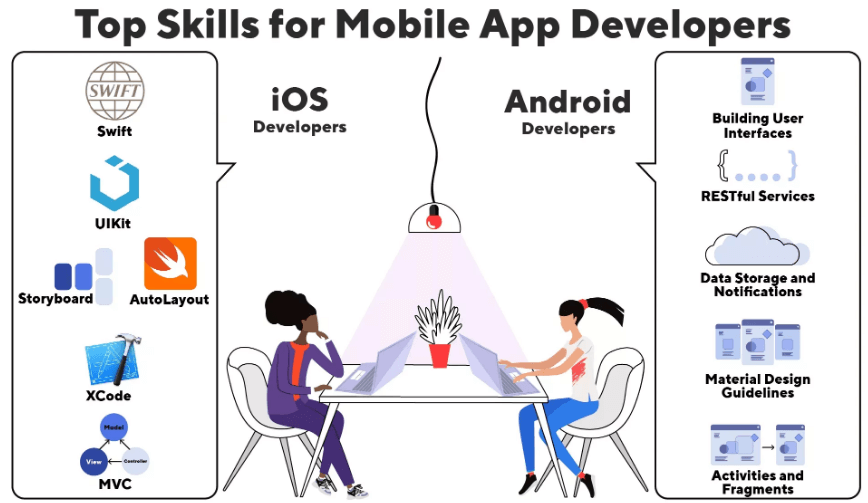
- Native iOS — Swift and SwiftUI, built with Xcode. The best choice if you want deep integration with Apple's ecosystem and top performance on iPhone and iPad.
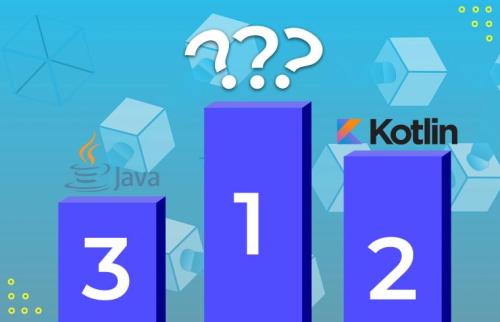
- Native Android — Kotlin is now the standard, paired with Jetpack Compose for modern UI development.
- Cross-platform — Flutter (Dart) and React Native (JavaScript/TypeScript) let you ship to both iOS and Android from a single codebase, which is a common choice for startups and MVPs.
What are the main benefits of IT services for healthcare organizations?
How to actually learn it
There isn't one "correct" route into mobile development — successful developers come from all three of these paths:
- A computer science degree, which gives you a strong foundation in algorithms, data structures, and software design — useful, but not required.
- A coding bootcamp focused specifically on mobile development, which can get you job-ready in a few months if you're disciplined about practicing outside of class.
- Self-study using official documentation (Apple's Swift docs, Android's developer guides), combined with building real projects rather than just watching tutorials.
Whichever path you choose, the skill that actually gets you hired is being able to build things, not just talk about frameworks. Recruiters and hiring managers look for a portfolio of working apps far more than they look for certificates.
Build a portfolio that proves you can ship
A strong portfolio doesn't need to be huge — two or three well-built apps beat ten half-finished ones. Aim for projects that show you can:
- Design and implement a clean, working user interface
- Connect to a real API and handle data properly (loading states, errors, empty states)
- Manage app state and navigation without it turning into spaghetti code
- Publish something to TestFlight or the Play Store's internal testing track, even if it's small
Contributing to an open-source mobile project is another strong signal — it shows you can read other people's code and work within an existing codebase, which is most of what the job actually involves.
Behind the Scenes: The Development of Safe Crack
What the job looks like day to day
Mobile developers spend a lot of their time on things that don't show up in tutorials: fixing bugs reported by real users, adapting UI to different screen sizes, keeping up with OS updates that change how permissions or background tasks work, and coordinating with designers and backend developers. Being comfortable with version control (Git), writing tests, and communicating clearly about technical trade-offs matters just as much as writing the app logic itself.
Compensation varies a lot by region, company size, and experience level, so it's worth researching current ranges for your specific market rather than relying on generic numbers. What tends to hold steady everywhere is that developers who can ship complete, polished apps — not just prototype-quality code — are the ones who get hired fastest and promoted quickest.
Mobile development rewards consistency more than raw talent. Build real projects, get comfortable with the tools your chosen platform actually uses in production, and keep shipping. That's the path that works.